
Where the monarchs are right now
Every fall, a butterfly that's never made this trip before flies two thousand miles to a forest it's never seen. Follow it below, and then see where you are on your own map.
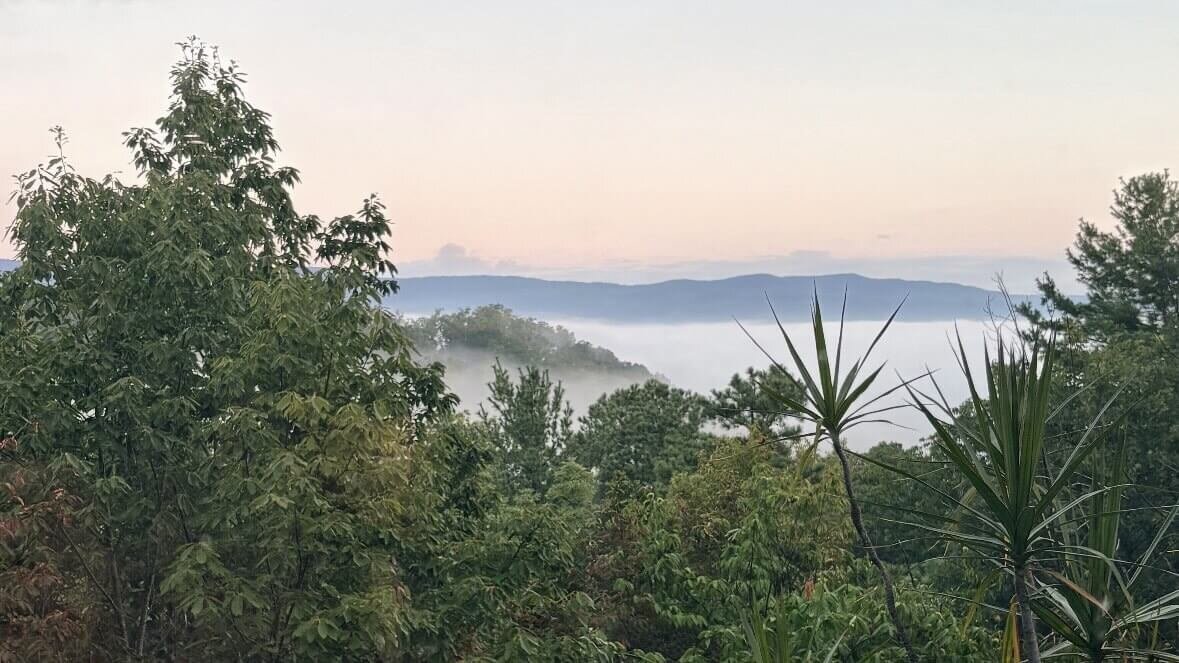
A morning from my deck in the Shenandoah Valley, Virginia. The monarchs come through here in September.

Danaus plexippus. About four inches across, half a gram, and roughly two thousand miles from here to Michoacán.
Tap any dot along the route to read what's happening there, or drag the slider to move through the season.
Monarchs travel on a broad front, not a single line, so at any moment they're spread across many states at once. The marker shows roughly where the middle of that wave falls in a typical year. It isn't live sighting data.
One insect, four bodies
A monarch doesn't grow up the way we do. It builds a body, uses it until it can't, and then takes itself apart to make the next one.
Tap through each one.

I'm Rachel Cline. I teach yoga and coach women through midlife transitions, here in the Shenandoah Valley that some of these monarchs fly through.
And where are you?
Answer these four questions to get an idea of where you are on your journey.
The women I work with keep telling me some version of the same thing. They know something's happening, but they don't necessarily have the language for it. And it can help so much to just be able to name the part of the road that you're standing on.

Sunrise over the Blue Ridge. They follow these ridgelines south.
The positions on this map follow the typical timing of the eastern monarch migration rather than live sightings, so think of it as a season calendar you can watch unfold. For real reports coming in from people watching their own skies, and to add your own, visit Journey North, the citizen science project that's tracked this migration since 1994.
